
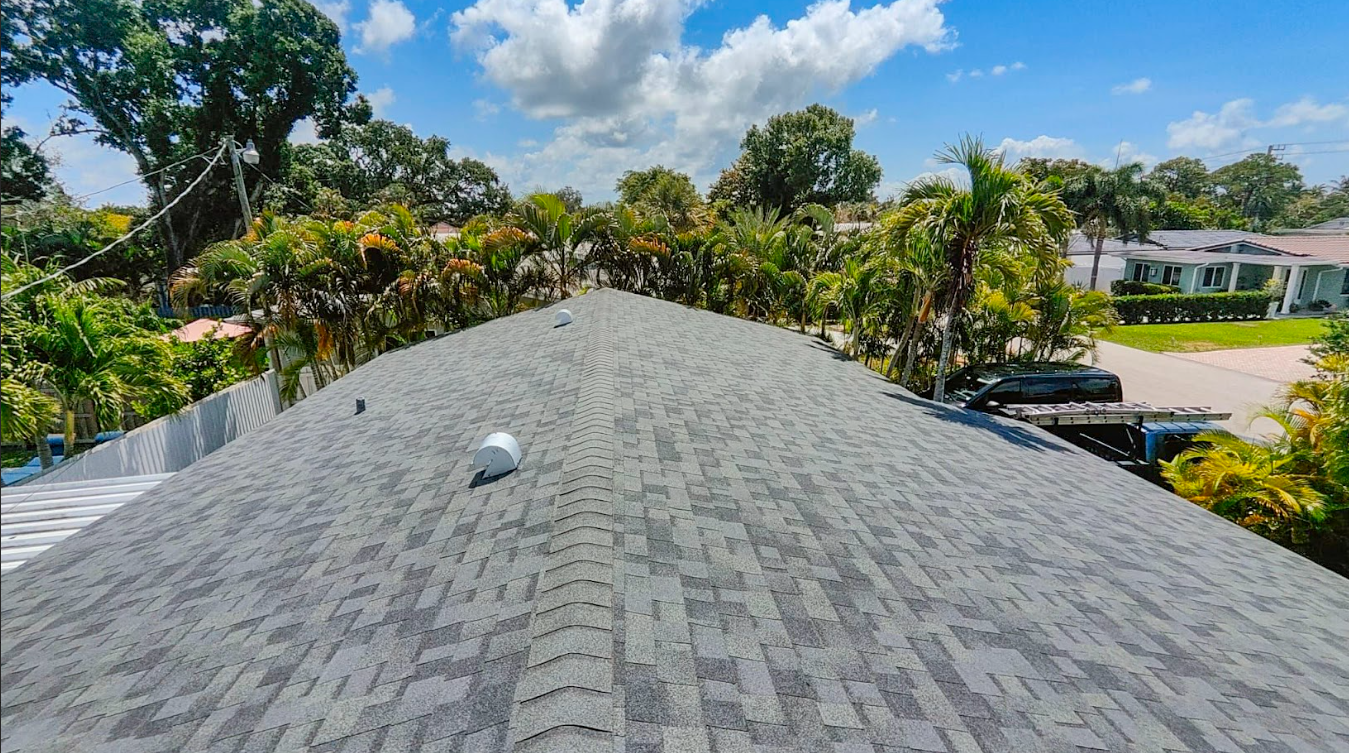
Your Fort Lauderdale roof leaks after heavy rain because water is finding a weak point that dry weather hides: failed flashing, cracked sealant, worn shingles, clogged drainage, or aging underlayment. Most leaks start at roof penetrations and transitions, not in the middle of a roof panel. A licensed roofer can usually find the source in a single inspection, and the fix is often small if you catch it early.
Here is the blunt version. A leak that only shows up in a downpour is not a minor annoyance. It is a warning that your roof is already failing at one specific spot, and the next storm will test it harder.
Why does my roof only leak when it pours?
Fort Lauderdale rain does not just fall. It arrives in sideways, wind-driven sheets that push water up and under shingles, tiles, and flashing edges. Light rain runs off a roof. Heavy rain finds every gap.
The stain on your ceiling is also a poor map. Water travels along the decking, down a rafter, and across insulation before it drips, so the wet spot inside can sit several feet from the actual opening outside.
What are the 7 most common causes of roof leaks in Fort Lauderdale?
1. Failed flashing
Flashing is the thin metal that seals the joints around chimneys, skylights, vents, and wall edges. South Florida heat and UV exposure make sealant dry out and pull away. This is the number one leak source on most homes, and it is rarely visible from the ground.
2. Cracked pipe boots and sealant
The rubber collars around plumbing vents crack in the sun long before the roof itself wears out. A cracked boot lets water run straight down the pipe into your attic.
3. Worn, curled, or missing shingles
Granule loss, curling edges, and shingles lifted by past wind events all expose the layer underneath. If your home has an asphalt shingle roof, a closer look at how shingle roofs are installed and maintained will help you judge what normal wear looks like.
4. Slipped or cracked tile
Tile sheds most of the water, but the underlayment beneath it is the real waterproofing layer. One broken tile after a storm can let water reach an underlayment that is already brittle.
5. Ponding on flat or low-slope sections
Water that sits for more than 48 hours accelerates membrane wear and finds seams. If part of your home has a flat section, asphalted flat roofing is built to handle drainage differently from a pitched roof, and drains and scuppers need to stay clear.
6. Clogged gutters and valleys
Leaves and debris back up water under the roof edge. Valleys, where two roof planes meet, carry the most water and fail first when blocked.
7. Old storm damage that was never fixed properly
A patch done after a past storm can hold for months and then fail in the next heavy rain. Temporary fixes are the most underestimated cause of repeat leaks.
How can you find where the leak is coming from?
You do not need to climb onto a wet roof to narrow it down. Start with these checks:
- On a dry day after a storm, go into the attic with a flashlight and look for damp decking, dark streaks, wet insulation, or daylight coming through.
- Trace the ceiling stain uphill. The entry point is almost always higher than the stain.
- From the ground, use binoculars to look for missing shingles, cracked tile, lifted flashing, or debris in valleys.
- Check the roof around every vent, chimney, and skylight first, because those are the usual suspects.
If you cannot find it in ten minutes, stop. A roofer with moisture tools and a ladder will do it faster and more safely.
What should you do right now?
- Move furniture and valuables away from the wet area and set out buckets or towels.
- Take dated photos and video of the damage for your insurance claim.
- Call a licensed roofer for a temporary tarp or emergency repair if water is actively entering.
- Skip the tube of roofing cement. A surface patch hides the problem and can complicate a proper repair later.
Waiting is the expensive choice. Our breakdown of what happens when you delay a small roof fix shows how a minor drip turns into rotted decking and mold. Moisture can start supporting mold growth within 24 to 48 hours.
Should you repair the roof or replace it?
Repair makes sense when the damage is limited to one area, the rest of the roof is in solid mid-life condition, and the decking underneath is dry and firm. A good roof repair in Fort Lauderdale targets the exact failure point, such as flashing, a boot, or a few shingles or tiles, and tests it.
Replacement makes sense when leaks appear in more than one spot, shingles are shedding granules across the roof, decking is soft, or you have paid for repeat patches. If that sounds like your roof, review how residential roofing replacement works before you collect quotes.
One local factor matters here. Broward County sits in the High-Velocity Hurricane Zone, so roofing work follows stricter product approval and installation requirements than most of the country. Florida's rules on how much damage triggers a full replacement have also changed in recent years, so ask your roofing contractor in Fort Lauderdale what applies to your home's age and permit history. For ongoing prevention, a scheduled roof repair and maintenance visit before each wet season costs far less than an emergency call.
Frequently asked questions about roof leaks in Fort Lauderdale
Why does my roof only leak during heavy rain?
Heavy, wind-driven rain pushes water sideways and upward into gaps that light rain never reaches. Small cracks in flashing, sealant, or underlayment stay dry most days and only open a path when rain is heavy or lasts for hours.
How much does it cost to fix a roof leak in Fort Lauderdale?
Cost depends on the source, roof type, access, and how much water damage has already spread. A flashing or pipe boot repair is usually far cheaper than repairing soaked decking or underlayment. Ask your roofer for an itemized written estimate that names the cause of the leak.
Can I fix a roof leak myself?
A temporary patch can slow a drip, but it rarely solves the cause, and walking a wet roof is dangerous. DIY sealant can also hide the real entry point and make a professional repair harder. Use a tarp or call a roofer for anything beyond emergency control.
Does homeowners insurance cover a roof leak?
Policies often cover sudden damage from a covered event such as a storm, but usually exclude wear and tear or long-term neglect. Document the damage, report it promptly, and read your policy or ask your agent what applies.
How fast should I repair a leaking roof?
As fast as you can schedule it. Water soaks insulation and decking quickly, and mold can begin within one to two days of persistent moisture. Even a small leak deserves an inspection this week, not next season.
When is the best time to repair a roof in Fort Lauderdale?
South Florida's wet season runs from roughly May through October, and hurricane season ends on November 30. Do not wait for the dry months to book an inspection. Handle active leaks immediately, and plan work once the heavy rain tapers off.
Get the leak found before the next storm
Evans Roofing has served Florida homeowners since 1986. If you want a Fort Lauderdale roofer to locate the exact source, explain your options in plain language, and give you a written plan, contact our Broward and Miami team or call (855) 297-6157. Prefer to start online? Request a quote and tell us what you are seeing.


Share On: